

Let us introduce you
“You can’t untie a knot without knowing how it’s made.”
(Aristotle)
A land is not a land without its inhabitants, the passage of time, and the weight of its history. Every person who passes through it, every war, historical event, weather phenomenon, or even its way of celebrating life, shapes the character, idiosyncrasies, and landscape of a region. Without all of this, a homeland is nothing more than a piece of land. Countless figures, some more well-known and some less remembered, have passed through the Valencian Community, leaving their mark and modifying the region's appearance to form what it is today.
These are some of them
Gross June 10th
In the year 616 from the founding of Rome, in the year 138 BC, the consul Decimus Junius Brutus gave fields and a fortified city to those who had fought in Hispania in the time of Viriathus, which was called Valencia. Thus (have passed) 21 centuries, and may many more centuries pass happily, the Valencian senate and people (did so), at the end of the 21st century.”
(Translation of the plaque embedded in the ground in Plaza de la Virgen, Valencia)
Hannibal Barca
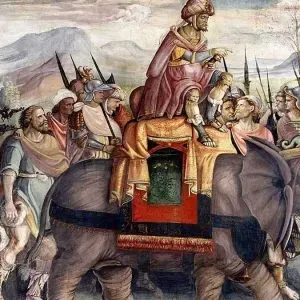
The battle known as the "Siege of Saguntum" was a military engagement that took place in 219 BC between the Carthaginians, led by Hannibal Barca, and the Saguntines, allies of Rome. It occurred near the modern city of Saguntum, in the province of Valencia. The battle is remembered primarily because it triggered one of the most important wars of antiquity: the Second Punic War.
El Cid Campeador
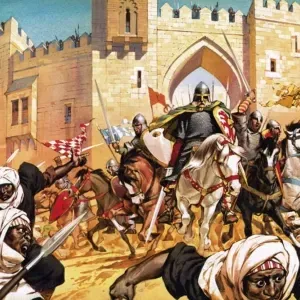
The Siege of Valencia was a military operation undertaken by the forces of Rodrigo Díaz de Vivar, better known as El Cid Campeador, against the city of Valencia. After its fall on June 17, 1094, El Cid established a principality independent of the other Christian states of the Iberian Peninsula.
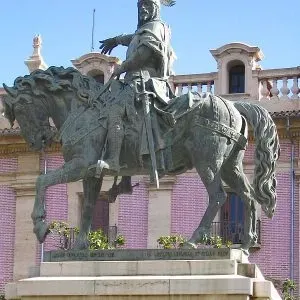
James I of Aragon, The Conqueror
Few sovereigns left such a profound mark on their time as James I the Conqueror. He inherited vast domains: from his father, the Kingdom of Aragon and the counties of Barcelona and Urgell; from his mother, Maria, the Lordship of Montpellier. He expanded these territories through a series of conquest campaigns against the Muslims, which led to the incorporation of two new kingdoms: Majorca and Valencia. He conquered the city of Valencia on October 9, 1238.
Maria of Castile, Queen of Aragon
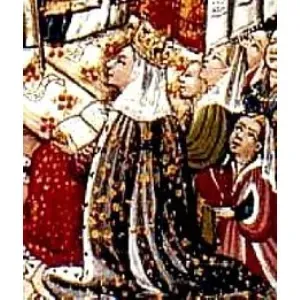
Queen Maria of Castile, wife of Alfonso V and regent of Aragon, tirelessly mediated throughout her life, seeking peace and harmony between the Crowns of Aragon and Castile and the Kingdom of Navarre. Maria effectively used the authority and influence granted to her by her kinship with the various kings and queens of the Iberian Peninsula. Furthermore, she was a sovereign particularly committed to justice and its administration. She also acted as a patron of the arts, promoting culture in the city of Valencia, where she died and was buried in the Convent of the Trinity.
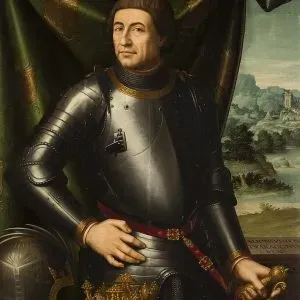
Alfonso V of Aragon, “the Magnanimous”
Around 1424, the second successor of Martin "the Humane", King Alfonso V the Magnanimous, brought the royal reliquary to the palace of Valencia, and on the occasion of his stay in Naples, it was given with the other royal relics to the Cathedral of Valencia in the year 1437.
The Holy Chalice, considered to be the same one used at the Last Supper, was part of this reliquary and is on display in the Cathedral, in the chapel of the same name.
Isabel de Villena
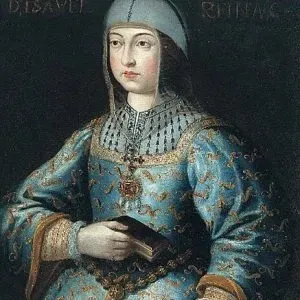
Elionor Manuel de Villena, known as Sister Isabel de Villena, was a Spanish nun, poet, and prose writer. She is considered the first known writer in Valencian. Her work 'Vita Christi', the only one that has survived, is framed within the proto-feminist movement of 15th-century Spain. During her religious life, she surrounded herself with a large group of writers who especially respected her for her intellectual stature. Her work is an essential part of the Valencian Golden Age.
Will you join us to discover Valencia?
Tell us who's coming, what interests you, and how much time you have. We'll take care of making it a tailor-made experience for you.